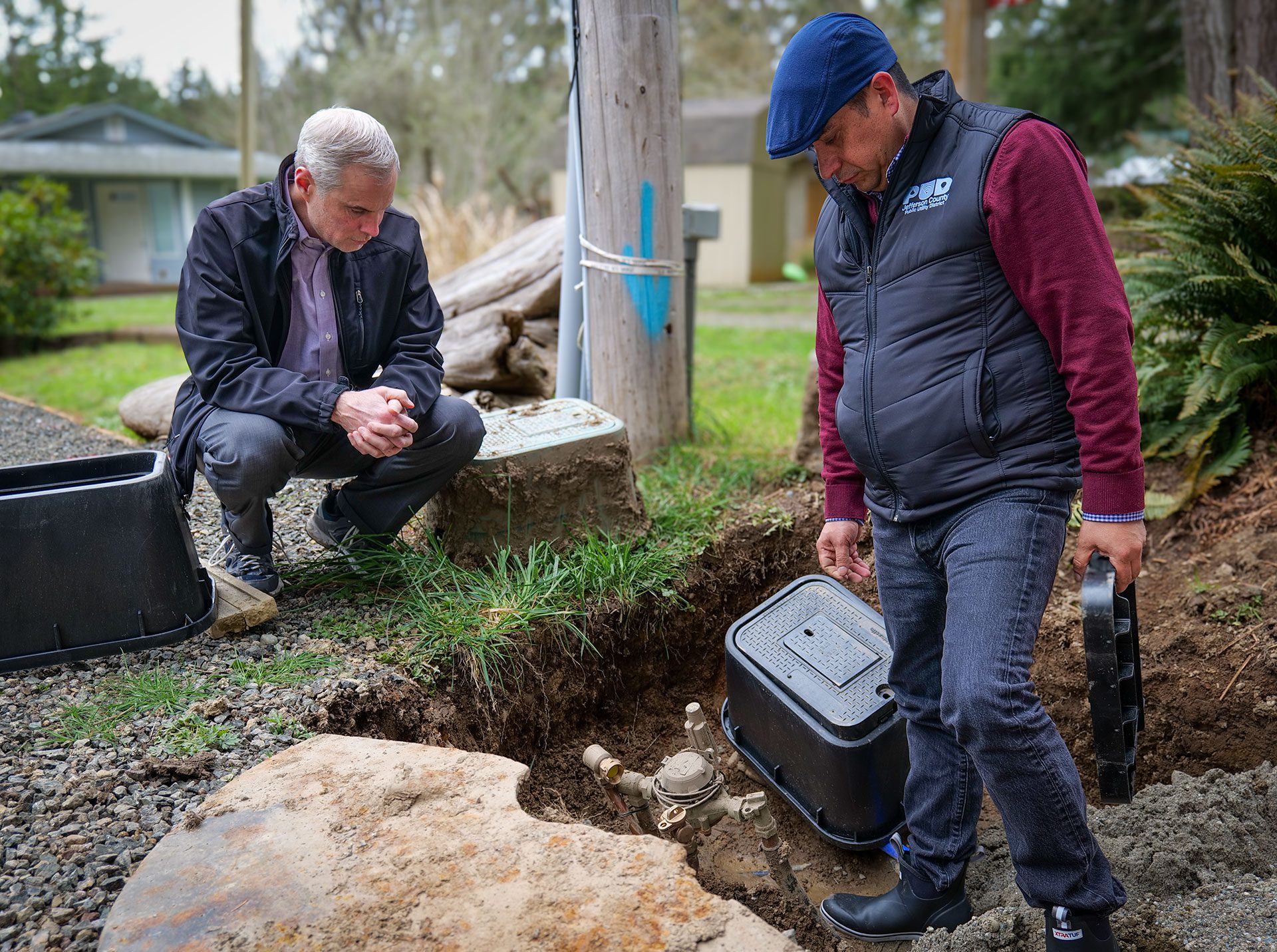
Coyle Water System Update
At its peak just a few short months ago, nearly 2/3 of the water pumped from the ground in the Coyle Water System never made it to customers.
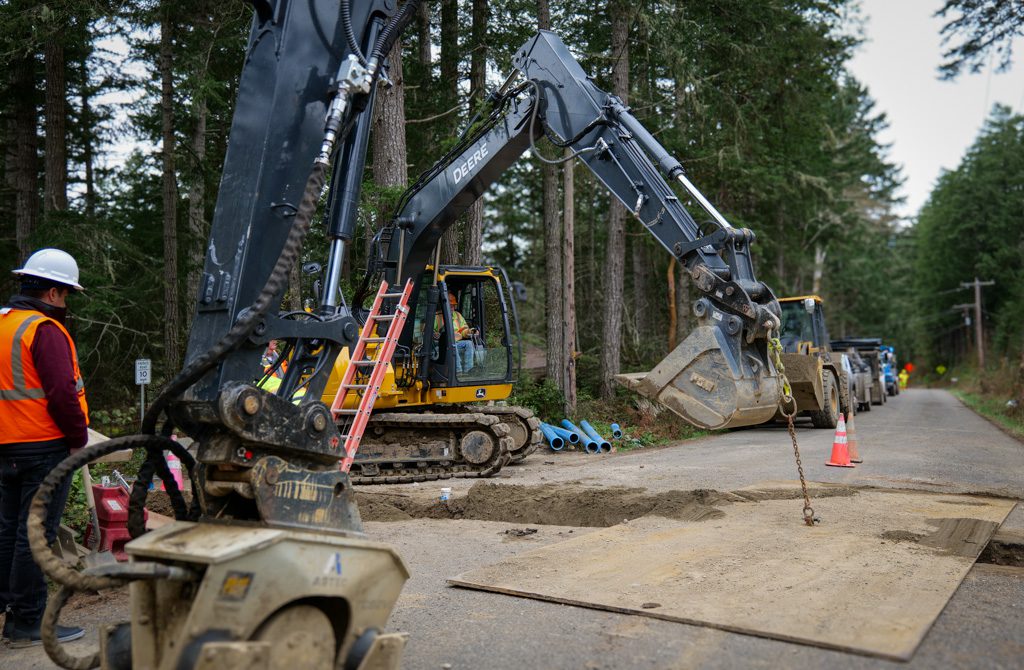
Today, crews from Pacific Civil Infrastructure (PCI) have completed pressure testing of more than 8,800 feet of new PVC water line, which provides service to 118 homes lining the end of the Toandos Peninsula in south Jefferson County.
It’s an impressive endeavor replacing an entire water system, and the PCI team, with help from JPUD’s (Title) Doug Reeder, approached the buildout in two main pieces: A upper and lower section. Hazel Point Drive served as the central dividing line. From that midpoint, crews advanced the buildout one street at a time, ensuring steady progress while minimizing disruption for the surrounding community.
The Trench
Let’s dig into how more than 1.5 miles of line was installed so quickly.
Using excavators, crews carefully constructed a network of trenches to install new thick-walled PVC pipe within the utility right-of-way. The existing 4-inch cement-asbestos lines were left in place and worked around, while the new 6-inch lines were installed at the proper depth. In the Pacific Northwest (where deep freezing is typically not a concern) this generally means placing the pipe about 40 inches underground.
New gravel was placed around the line and each road was temporarily compacted and graded awaiting testing before final grading and compacting as the project nears completion.
Pressure testing of the system meant isolating the upper and lower sections of line and raising the pressure to 200PSI–well above the typical operating range of 60PSI. The lines are tested in 15 minute intervals at this high pressure, then flushed several times with a high chlorine solution to sterilize the line. Once testing is complete, a Bac-T sample is conducted to ensure no harmful pathogens remain.
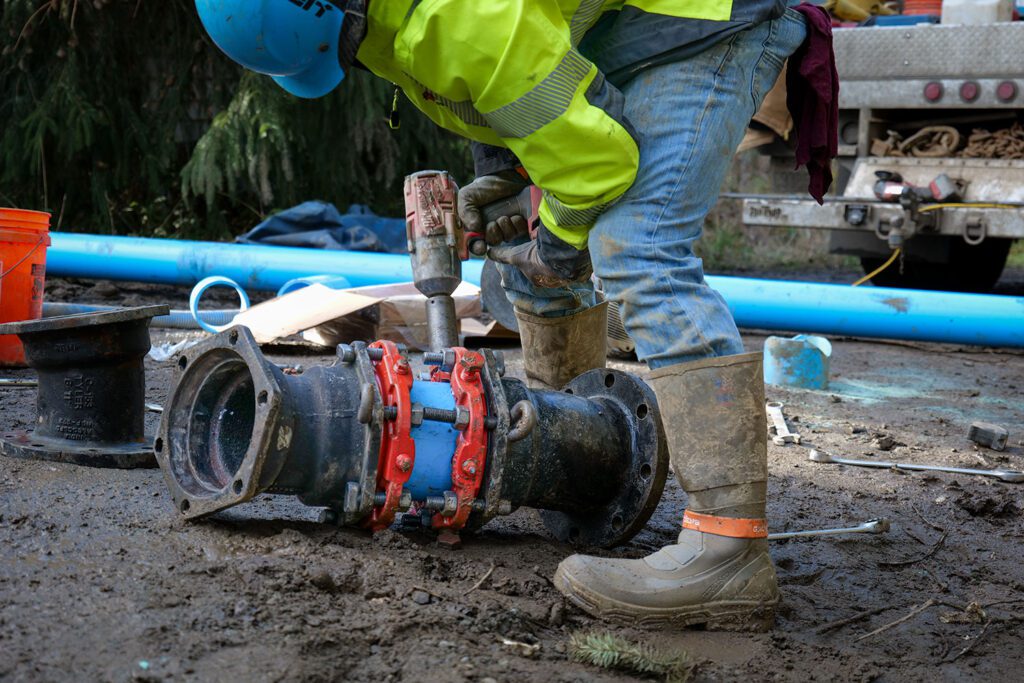
There’s a lot happening underfoot
Prior to the start of the project, a quick drive around the Coyle area highlighted the necessity for the 8-1-1 Call Before You Dig service. Temporary chalk paint of various colors criss-crossed road edges, each telling a story of a service resting below.
Crews had to carefully navigate communication lines, primary power, and the finicky existing water line. The reason for the complete overhaul stems from the fragile nature of the existing pipe, which led to the excessive 62.4% leak-loss. The State of Washington guideline for water systems is less than 10% over a 3-year average.
Making the Connection
The final step is connecting customers to the new system and switching the service from old line to new only takes a few minutes, and homeowners should see no change in water pressure.