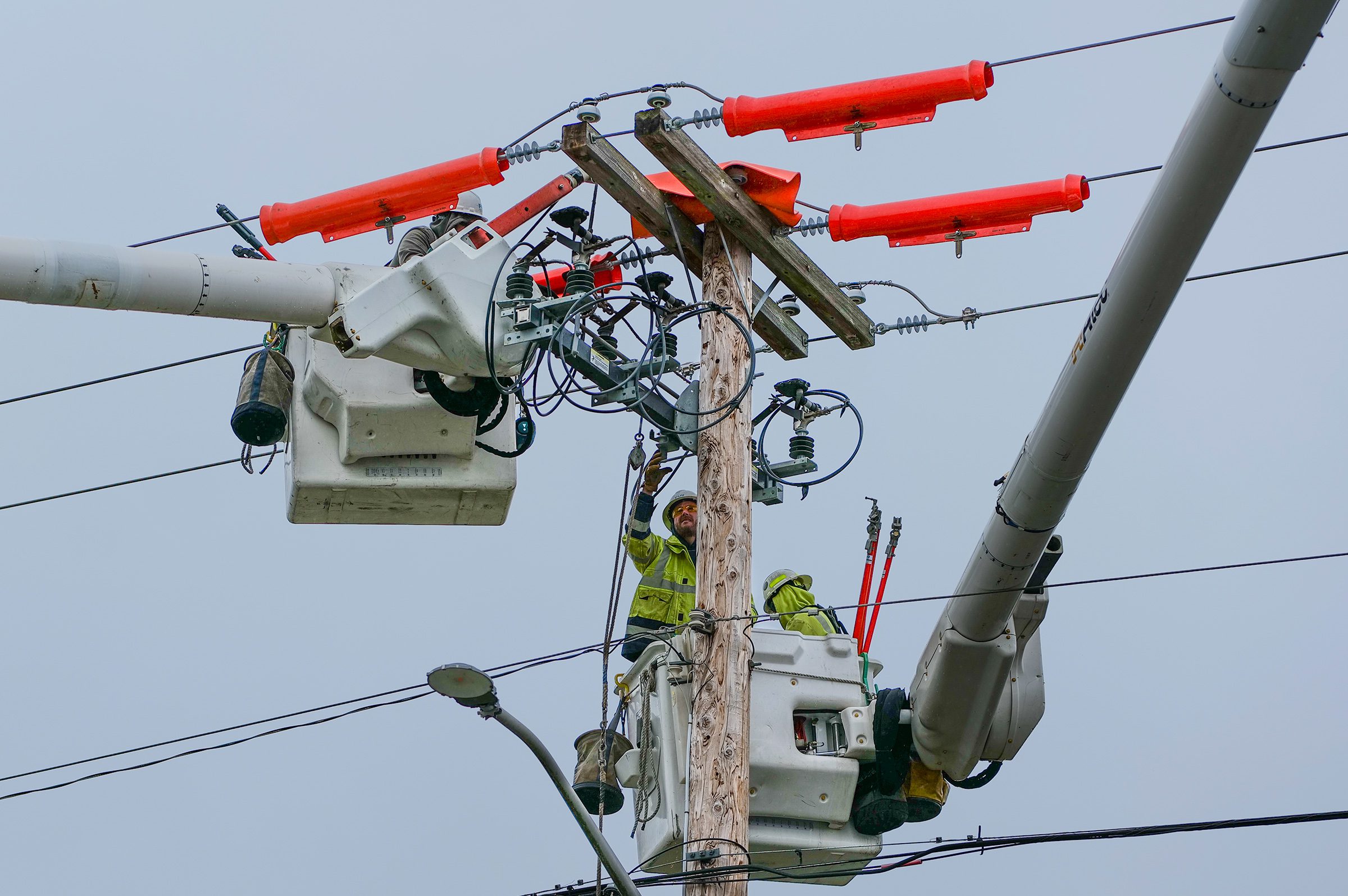
What’s that? Load Break Switch
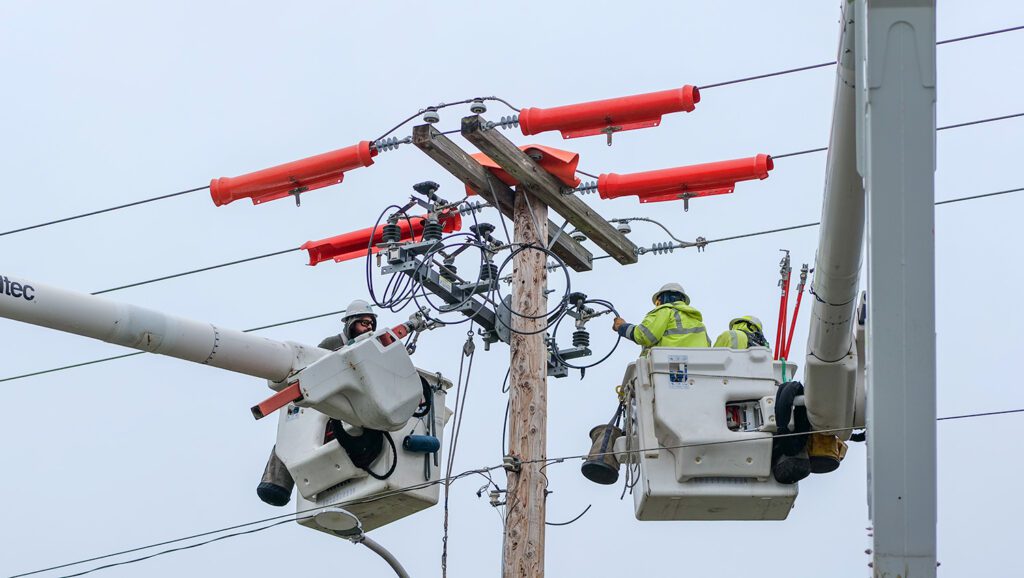
A pole-mounted load break switch is a device installed on a utility pole that helps safely control the flow of electricity on overhead lines. Think of it as a large, specialized switch that can turn sections of the electric system on or off as needed—without shutting down power for everyone.
So, why install a load break switch?
There are numerous reasons why a switch is helpful, but some of the top reasons include help with managing load growth, reliability, and restoration recovery.
System growth and distribution:
As new homes and businesses are added to the grid, these switches help enable SCADA and line crew members to more easily distribute load. In the case of the newest switch, strategically positioned between the PUD’s Hastings and Dana Roberts Substations, it helps distribute load between substations when excess is placed on one or the other.
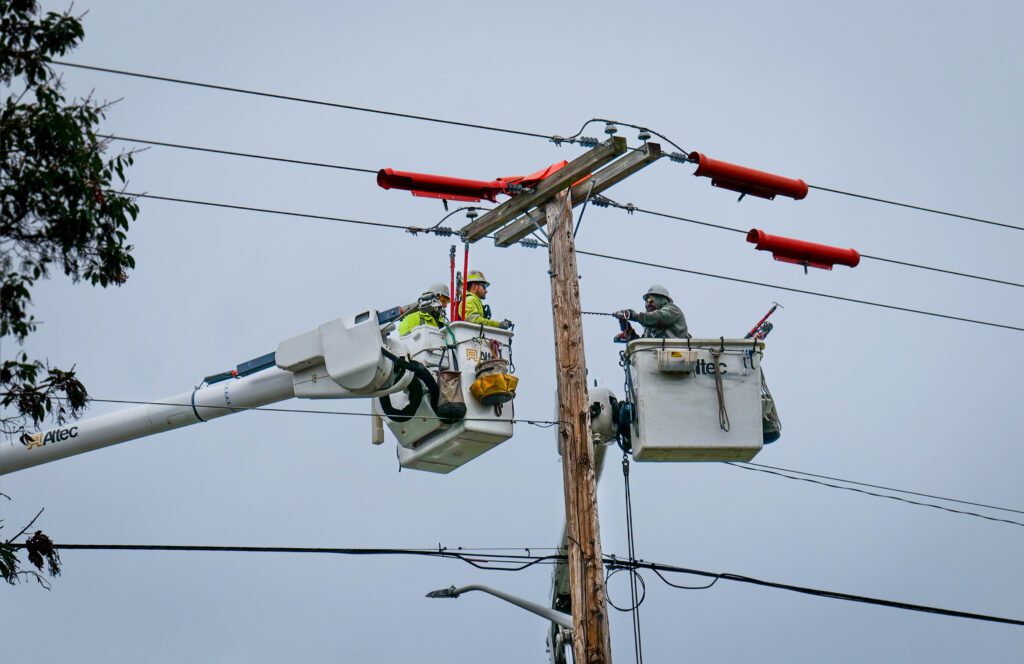
Improving reliability: When trouble occurs on a power line—like a fallen tree or damaged equipment—the switch lets crews quickly isolate the problem to help limit the size of an outage. It also can help speed up outage restoration times, allowing crews to reroute electricity around a damaged area. Doing this allows crews to restore unaffected customers while also safely conducting repairs.
How do you know where to mount a load break switch?
Electrical engineers identify likely line areas where load could be shed from one substation to a neighboring substation. Once an area is determined, existing utility poles in the region are evaluated to see if connecting a switch is possible. Important consideration: Utility poles are specifically engineered to support the load placed on them—or rather the potential load placed on them by the weight and stress from any connection (overhead lines or communication lines) that could bear weight from ice or high winds. Utility poles all work together to support the heavy load of overhead lines.
The weight of the device itself must be considered. The metal structure and components often weighing between 150 and 400 pounds.
Once a suitable pole is identified, the switch is assembled and brought to the site where it is permanently mounted to the pole.
When needed, the load break switch is opened or closed from the ground using a long insulated pole due to the high voltage.