Solar Gains
Future Power Demand Calls for Creative Renewable Energy Sources
Solar energy generation in our sunny corner of the world has become an increasingly visible part of our electric equation. In 2025 alone, solar production in Jefferson County totaled approx. 2.3% of our utility’s energy profile. It may not sound like much, but customer-generated solar presents a unique slice of the energy pie, especially as demand across the region squeezes an already strained generation and transmission system.
Let’s take a closer look at how solar works with our grid and some lesser-known parts of balancing energy load.
Solar panels collect sunlight and convert it into Direct Current (DC) electricity. While DC power works well for batteries and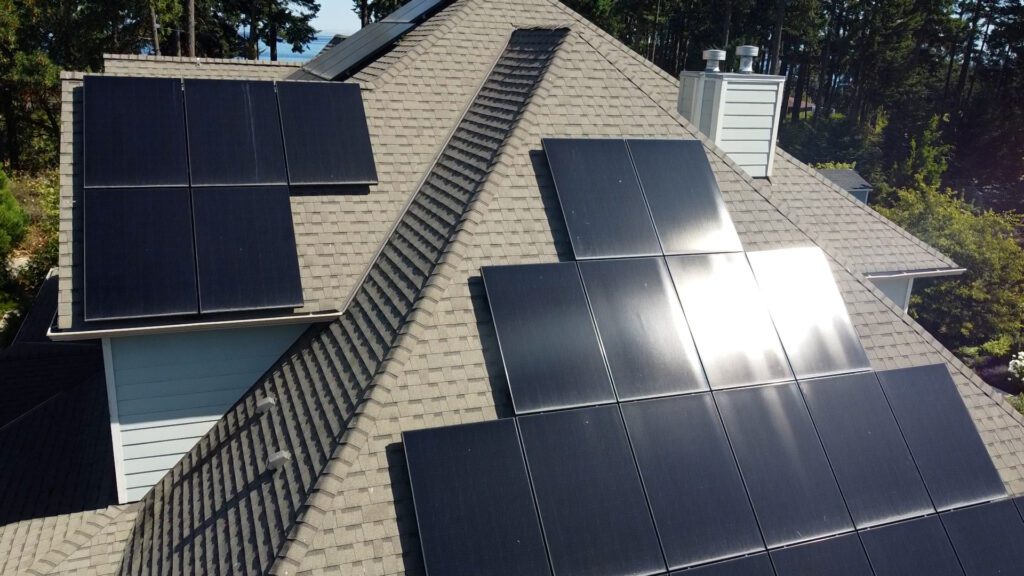 electronics, homes and the electric grid operate using Alternating Current (AC) electricity. Before solar energy can be used by the home or sent onto the grid, it must first pass through an inverter.
The inverter acts as the system’s translator, converting DC into AC electricity and synchronizing it with the power already flowing through the grid. Once converted, solar energy flows first to serve electrical demand inside the home. If the solar system produces more electricity than the home is using at that moment, the excess energy passes through the net meter and flows onto the grid. When household energy use exceeds solar production, electricity is automatically supplied by the utility grid.
Common question: If solar can power a home directly, why is the grid still needed?
It comes down to reliability, power quality, safety, and balancing energy demand in real time. Utilities must stay within nominal voltages. This means voltage can only vary a small percentage above or below 240V to the meter or 120V to outlets in the home. Sway too far from nominal voltage and you risk damaging sensitive electronic devices. The grid helps maintain stable voltage and frequency while ensuring enough electricity is available whenever solar production changes due to clouds, weather, or nighttime conditions.
A solar net meter on the home looks identical to a standard electric meter, but it performs a unique job. Instead of only tracking electricity delivered to the home, it measures energy moving in both directions. At the end of the billing cycle, customers are either billed for the “net” difference, or they bank overgeneration for credits on future bills.
When solar systems produce more energy than a household consumes, customers receive energy credits that are banked on their account and applied to future bills. These credits often build during sunnier spring and summer months, then help offset higher energy use later in the year when daylight hours decrease and energy usage rises for heating. Under Washington state law, unused banked credits reset annually in late-March. Any remaining utility-wide credits are converted to dollars and donated to the PUD’s Rainy Day Fund, which helps support low-income households struggling with energy costs. This totaled $28,531 in 2025.
All customers do pay a monthly base fee regardless of solar generation. The base fee supports the infrastructure required for operation and maintenance of our electric system, including poles, wires, substations, transformers, and crews.
Solar energy flows from the home into the broader grid thanks to a nearby transformer, which can work as a two-way street. Transformers reduce distribution voltage (often around 7,200 volts) down to 240 volts for homes, and they can also step up excess solar-generated electricity from homes so it can safely travel onto the distribution system.
Now for the safety side. In most cases, solar systems do not maintain interconnection to the grid during a power outage. Some systems can energize an in-home battery for emergency usage, but grid-tied solar arrays are designed with built-in “anti-islanding” protections that automatically stop feeding power onto the grid during outages. This protects utility crews working to safely restore service in the area.
Many electric utilities understand that net metering shifts costs from customers who have the ability to generate to customers that do not, often aggravating affordability concerns. A growing number of commissions have adopted changes to net metering tariffs to reduce this inequity.