Energy demand across the Pacific Northwest continues to rise as homes continue to electrify with new, more efficient technology and transition away from fossil fuels.
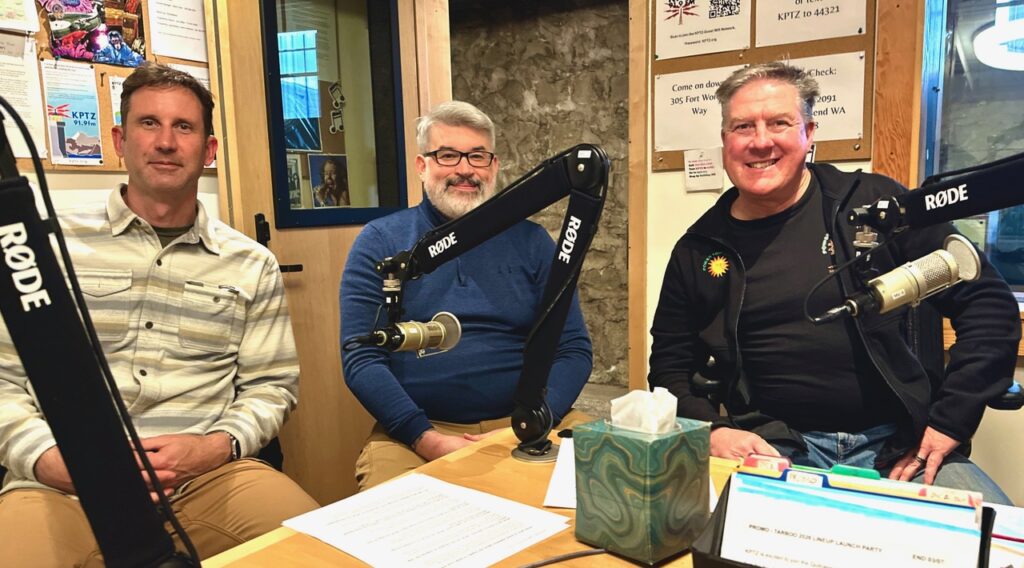
Energy panel Hans Frederickson (left) of Frederickson Electric, JPUD’s Kyle Chase (center), and Andy Cochrane (right) of Power Trip Energy in the studio with KPTZ’s Community Tides.
During a recent interview on Community Tides on KPTZ 91.9 FM, Jefferson County PUD Energy Efficiency Specialist Kyle Chase discussed how energy efficiency programs remain one of the most effective ways utilities can meet this demand while keeping costs manageable for customers.
As electricity use increases across the Pacific Northwest, energy efficiency programs remain a critical part of the solution—helping utilities meet rising demand, reduce infrastructure costs, and support affordable, reliable power for local communities. Below, Chase answers some key questions on the efficiency landscape.
Can you give us a glimpse into the world of electric demand for our region?
This can be tricky, and unfortunately there’s not a lot of good news here–Bonneville Power Administration (BPA) resources are pretty much spoken for and suffering downward pressure from snowpack and salmon preservation east of the mountains. As BPA joins the rest of the western regional power market, pricing could undergo unexpected changes as the value of our massive hydro batteries is somewhat redistributed. In the PNUCC Northwest Regional Forecast (2024), which produce a regional roadmap that helps utilities decide how to meet the Pacific Northwest’s future electricity needs over the next 20 years by combining energy efficiency, new power generation, and reliable grid planning, predicts 9GW of added load in the next decade. What does that look like for scale? Basically, this is one entire Oregon state or about 4-5 Seattle’s in straight capacity on our regional grid.
Where specifically does our power come from, and why such an emphasis on ‘clean’ power?
We have our clean BPA power mix, which is a stable combo of hydropower (76%), nuclear (13%), and a mixture of “unspecified”, which is a little wind, some solar, and other sources. So, our base is inexpensive, clean power.
Now, imagine we have an extended drought and an extremely hot summer-judges order a water spill to keep the salmon happy, but this does not leave a lot of water to put over the series of dams on the Columbia River. In this scenario, BPA then has to buy power on the regional market. This will be primarily natural gas peaker plants with a mixture of whatever else is on the market, including Wyoming coal, gas combined cycle, nuclear, solar, whatever is available. Overall, this power mix is “dirtier” in the eyes of the state of Washington and, in a post-2030 utility world, BPA will have to buy carbon offsets for this. On our end, customers will get hit with a double whammy of expensive peak power and have to buy carbon allowances on the market. There is NO WAY we can avoid these costs unless we keep our demand low, and generate clean power of our own.
How is energy efficiency part of the ongoing energy demand equation?
In terms of regional planning and avoiding infrastructure costs and tier 2 rates here at JPUD, I think energy efficiency will be absolutely critical. It is a many times proven resource that is often overshadowed by the easy access to very inexpensive hydro power, but at this point there is simply no other way to achieve the capacity the market needs in such a short time frame.
From the outside, it may seem odd that a utility, which operates with funding from the sale of electricity, would want to reduce the amount of electricity it sells. Could you walk us through why this is important?
Sure, first of all we get these efficiency funds 100% from BPA at the moment. It is our (rate payer) money–that has to be spent on energy efficiency. The Northwest Power Act requires BPA to seek this lowest cost generation (efficiency), rather than build new (more expensive) power generation in the form of power plants.
How energy efficiency helps the utility, in particular, is through reduced demand on our infrastructure, which can postponing costly upgrades. Money spent on heat pumps, insulation, etc., can save us money on upgrading transmission lines and substations. Our cheap BPA power also has a limit, relatively speaking. If we exceed that limit, we pay increased rates in the form of Tier 2 power, which is “dirtier” and more expensive. Dirtier, in a power sense, means it stems from sources such as natural gas and coal which will play heavily into state climate goals that energy suppliers must adhere to post-2030.
Under the Clean Energy Transformation Act (CETA), utilities are also required to soften rate payer impacts, particularly on energy burdened low income households. We do get some of the CETA tax proceeds in the form of carbon credits we can sell and use to fund energy efficiency programs.
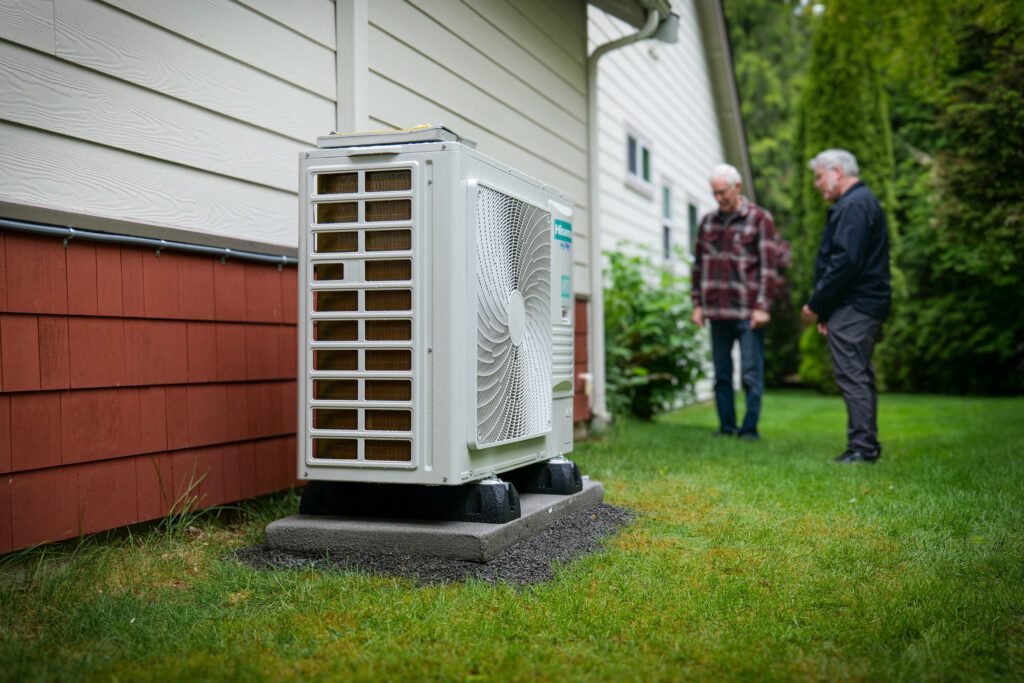
Kyle Chase, JPUD Energy Efficiency Specialist, walks a customer through the operation of a newly-installed heat pump system.
What do you consider to be the simplest way to save on a home energy bill?
Insulation and air sealing are some of the most cost effective measures, as is selecting the right appliances (choose Energy Star products!), heat pump technology is a game changer, but can be expensive and you need the good foundation of a well-insulated home for them to be effective.
If you were to choose one rebate option for your home, what would you do?
Depends on the home, older ones tend to need shell upgrades the most (windows, doors, and air-sealing), younger homes benefit more immediately by changing heating systems. If you want to know were to start, reach out to efficiency@jeffpud.org
Clearly, energy efficiency will play a major role in the future of our region. Any final thoughts you might have on the utility landscape and efficiency programs?
Electrical system constraints are real. Rate pressure and increased demand on shrinking resources is not going away. This sounds scary but we are not powerless. We can be smart about what we have and modernize our homes in a way that can avoid the worst impacts, and the PUD has resources to help. Engage with us so we can navigate our way to a clean, affordable energy future (while hopefully saving our customers money on their monthly utility bills!).