Forest-2-Grid – Making a Utility Pole [VIDEO]
There are 8,960 primary distribution poles, 1,480 secondary poles, and a few hundred transmission poles in service in Jefferson County. That’s a lot of lumber. So, how are they made?
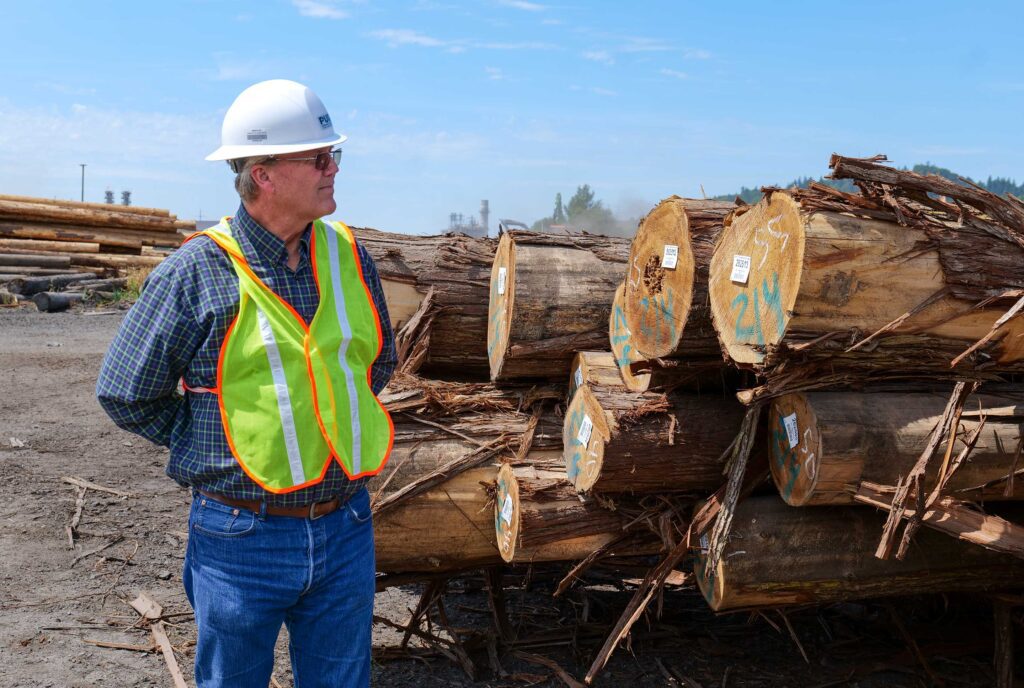
Nestled in a not-so-quiet corner of Cowlitz County in the town of Longview, WA, is the Bell Lumber and Poles Co. In Part 1 of our Forest-to-Grid series, we highlighted the selection and harvest process of locally-sourced cedar destined for the utility industry. Bell, which has been in business since 1909, operates several facilities around the country, and brings poles to the market whether here in the Pacific Northwest, the midwest, or east coast.
Bell can produce up to 15,000 poles per year from the Longview facility with the bread and butter being transmission-length poles (often 65′ long or longer). This caliber of pole is unique to the Northwest, as the majority of tree species east of Idaho do not grow beyond the magic 65′ number. Here, between Washington, Oregon, Idaho, and to a smaller degree, British Columbia, Bell finds high-quality Douglas Fir and cedar for production. The largest poles in the Bell yard were a set of three 130-foot-long transmission poles being prepared for a cross-country journey to the midwest.
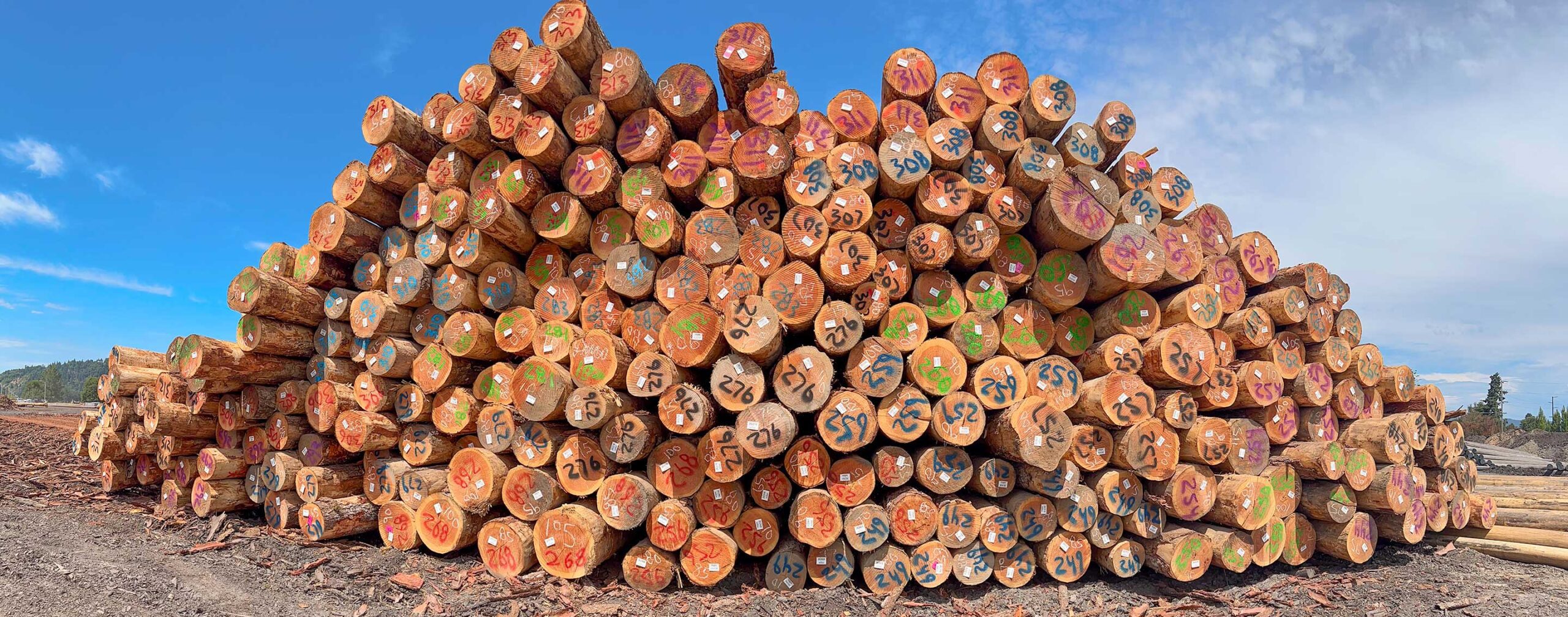
But not every tree that enters meets the grade. All pole timber is inspected prior to production, and the team estimates that only 5-7% of trees from a given stand of timber will make the cut. The rest are sent of to nearby mills to be made into dimensional lumber for homes.
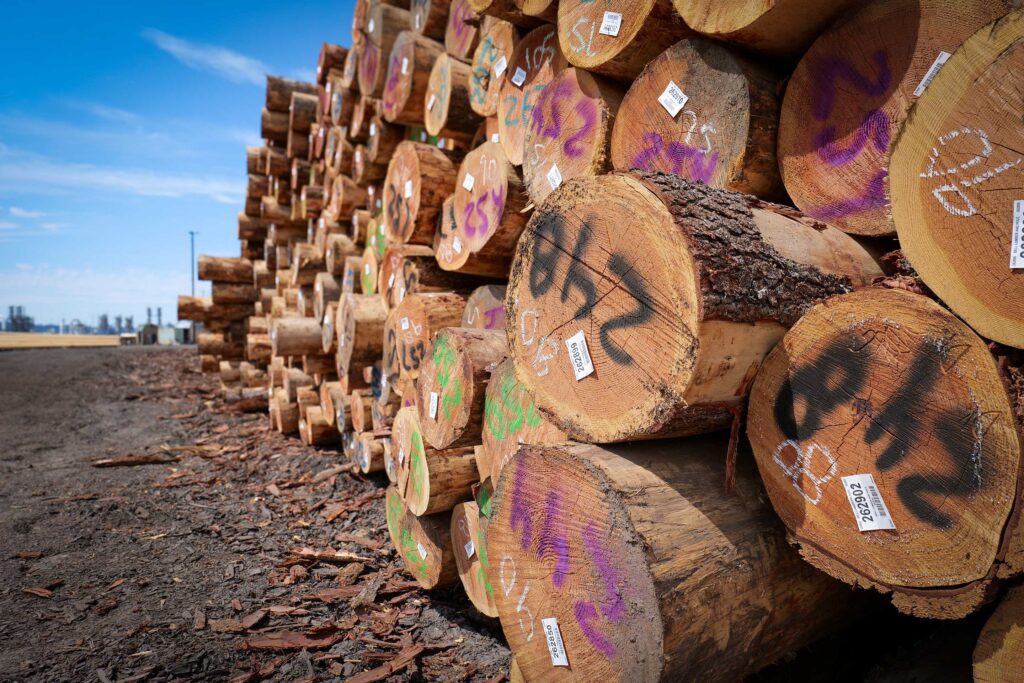
Those that have what it takes are dried. Dry time can last for a few weeks to up to 1-year, depending upon demand. The open air dry time allows the trees outer cambium layer to naturally shrink, avoiding many unpleasant splits in the trunk.
A loader places the tree on a custom conveyor to pass through a dual-head planer with a roughing and finishing pass blade arrangement. A skilled worker guides the pole through via heavy-duty wheeled sleds, while allowing the cutterheads to chew through up to 1/2″ of material per pass. The whole while the timber, whether a smaller 42′ pole or a 120′ transmission pole, is rotated to ensure as symmetrical a cut as possible.
The peeled pole is then placed on an elevated station for final grading. Bell’s team inspects each pole top and bottom, measuring, marking, and arranging until they are ready to be sorted.
The final stop for each pole varies. Some will end up making a relatively short road trip to Bellingham, WA for final treatment, while others will hop a train to Nebraska or beyond for treatment.