Flipping the Switch in Washington: JPUD Goes Federal
By Jameson Hawn, JPUD Community Relations Coordinator
It may seem surprising, but the future of our power, water, sewer, and broadband services is often shaped by decisions made 2,300 miles away in Washington, D.C. Advocacy for utilities is a responsibility the JPUD staff and elected officials take very seriously.
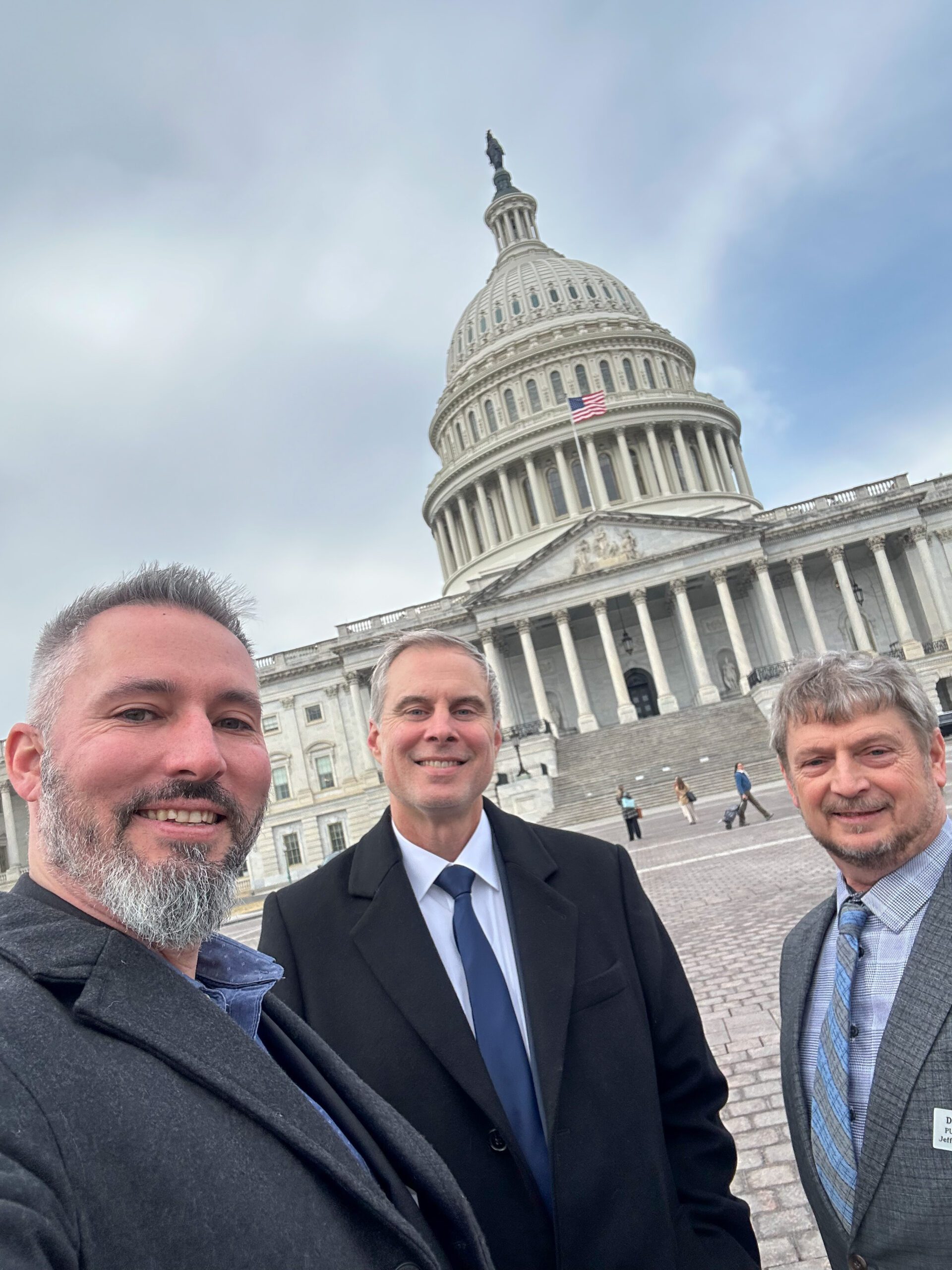
As a resident of Jefferson County, stepping onto Capitol Hill to meet with legislators about our utility needs, a full coast away from home, was a surreal experience. I’d like to take a moment to share, from a first-time visitor’s perspective, a look inside our nation’s capital.
Fun fact: Jefferson County is named after Thomas Jefferson, the third President of the United States.
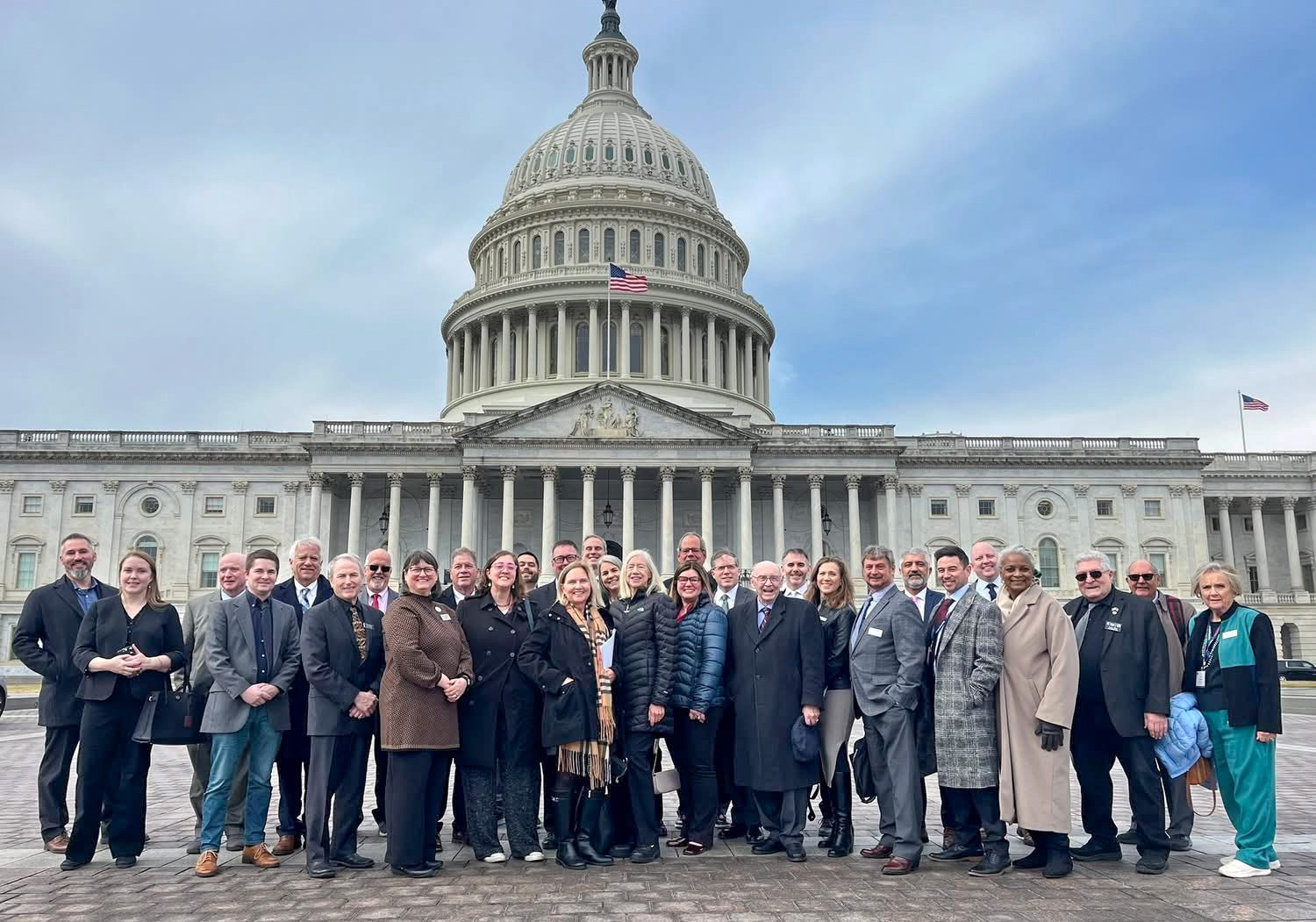
The Mission: Join fellow WA State utilities on Capitol Hill as part of the annual Washington Public Utility District Association (WPUDA) legislative rally Feb. 23-25. Organized by WPUDA staff, the meetings provide direct access to legislators and staff to talk all things power, water, sewer, and broadband. We voiced support for policies, programs, and funding opportunities geared toward keeping utilities safe, reliable, and cost-effective for our neighbors back home.
The legislative rally was a week on the move. To set the stage for discussions with our elected officials, let me take you into the Senate meeting room.
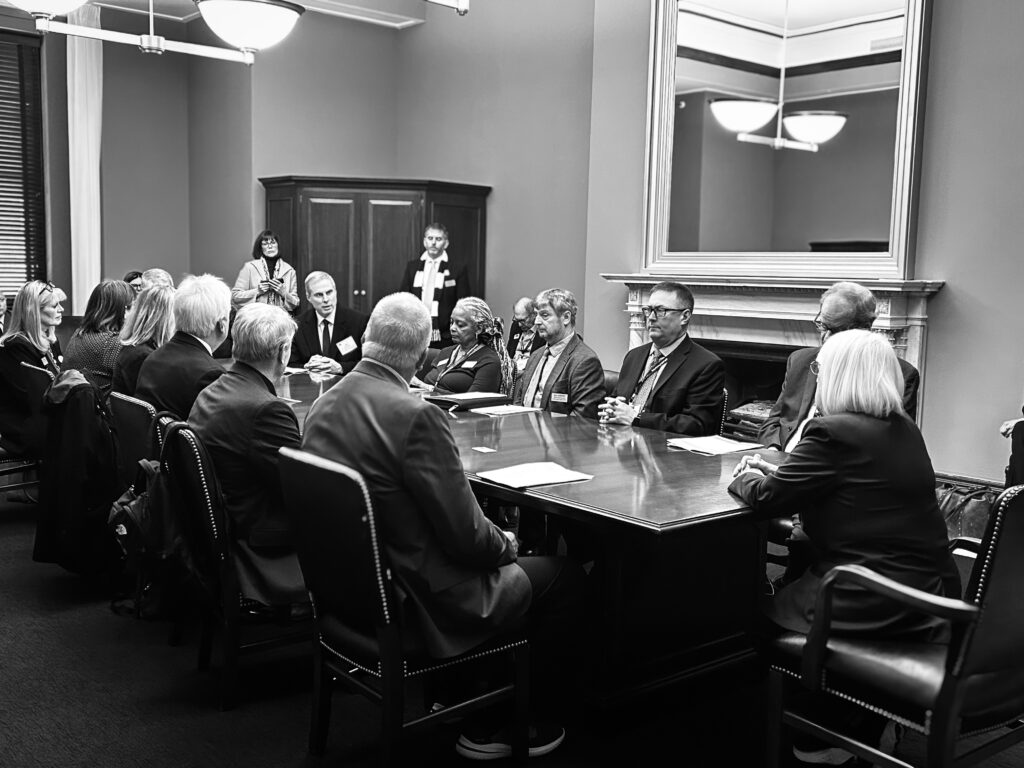
The oversized, well-worn conference table at the center was surrounded by utility communications staff, general managers, and elected commissioners from across Washington State. For this meeting, presenters–including Jefferson PUD General Manager Joe Wilson, and District 3 Commissioner Dan Toepper–lined the table, while additional attendees (myself included) gathered along the perimeter, ready to contribute to the conversation. All of us were eager for the opportunity to speak with Senator Patty Murray.
Senator Murray entered, brief introductions were made, and she jumped right in: “How can I help?”
WPUDA acts as an essential spoke in the wheel of regional utility efforts, providing a unified voice when legislation and high-level topics potentially impact utilities large and small. For this trip, WPUDA staff provided key points of discussion geared toward supporting WA State residents that rely on public utility services…for those counting, that’s a big lift for the folks surrounding the table to fit into a 30-minute meeting!
Commissioner Toepper guided the conversation between subject matter experts at the table: Continued support for Bonneville Power Administration and the federal system that provides utilities with clean hydropower; support for LIHWAP (an essential water utility funding source for at-risk, low-income customers); water infrastructure support to retain funding for a combined $6.5B in State revolving funds and an ask for grants to help utilities recoup expenses from utility relocates for fish bypass efforts. The list is detailed and, in many ways, carries with it the weight of our region’s utility future.
The conversation then turned to Jefferson PUD General Manager, Joe Wilson and a topic that quickly drew strong interest from Senator Murray: pole attachments.
That’s right, pole attachments. It may not sound glamorous, but it’s a topic that impacts each and every public utility because each and every pole is owned by our community (that’s 10,000+ poles in Jefferson County and counting).
Thanks to the federal Communications Act, public utilities like ours are able to maintain and set our pole attachment fees in alignment with Washington State law to ensure a few key items: 1. That every time a new connection is made to a pole our engineering staff is able to confirm the pole can actually physically support the load; and 2. That we are able to recover costs from private companies connecting to the pole with those costs going toward a future need to replace the pole (a pole typically has a 30-50 year lifespan).
WPUDA, along with the Association of Washington Cities, oppose legislation by private industry to amend the Communications Act which threatens to undermine our ability as a utility to recover costs for attachments–in a more standard-speak, any change to the Act would equate to electric utility customers subsidizing private companies, while also risking timely, essential safety checks by engineers.
Did I mention the list of utility topics was detailed?
Senator Murray and her staff listened as JPUD General Manager Wilson outlined concerns and real-world scenarios related to the potential loss of local control over our pole infrastructure. From my seat along the edge of the room—both as a participant and an observer of this unique and essential part of the legislative process—it was an impressive discussion to witness.
Conversations like this unfolded throughout the week on both sides of Capitol Hill, in House and Senate offices alike. I had the opportunity to speak in support of broadband funding efforts and water infrastructure needs and to the continued funding for FEMA. Between meetings we shared experiences with fellow PUDs while logging nearly 20,000 steps each day crisscrossing between buildings. After each meeting we would cross the National Mall at the foot of the United States Capitol. I’m not sure I’ll ever stop being impressed by its sheer scale and design.
Traveling 2,300 miles to be heard is no small journey, and I am honored to be entrusted with representing Jefferson PUD and our customer-owners. Standing alongside fellow WPUDA members reinforced that, even as a small utility district located nearly as far from our nation’s capital as possible, our voice still matters.