
The PUD manages and maintains several community drain fields and Large Onsite Septic Systems (LOSS) in East Jefferson County. The PUD regularly monitors its systems to meet or exceed all local and state public health rules. Some of the septic systems and drainfields the PUD manages and maintains include:
List of PUD Community Drain Fields/Septic Service
Jefferson County Permitted Systems
- Portage Canal (Port Hadlock)
- Rockard (Gardiner)
- Quilcene (Port of Port Townsend)
- Kala Point (multiple)
- Mas View Terrace (Port Ludlow)
- Levine (Gardiner)
- House & Roose (Shine)
- Squamish View (Shine)
- Schoenfeld’s (Bridgehaven)
DOH – Large On-Site Septic Systems (LOSS)
- Discovery Ridge (Port Townsend)
- Ocean Grove (Port Townsend
- Beckett Point (Port Townsend)
- South Point – Trails End ( Bridgehaven)
- Senior Seven (Port Hadlock)
Jefferson County & Jefferson PUD
- Port Hadlock Urban Growth Area (PHUGA) Sewer System (Port Hadlock)
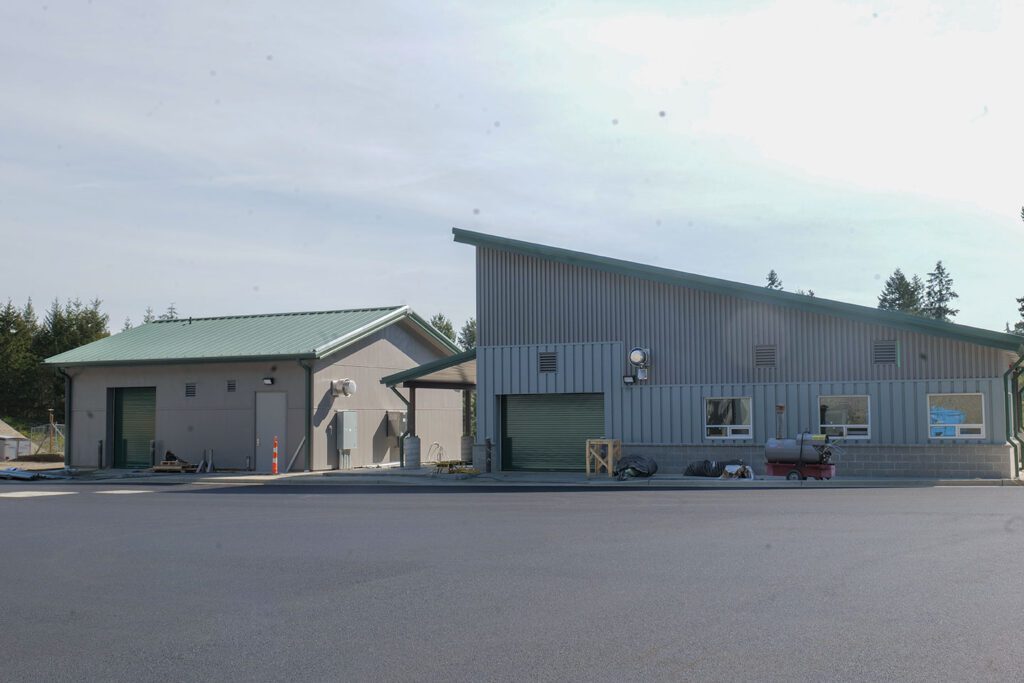
Jefferson PUD operates, maintains, and provides billing support through an interlocal agreement with Jefferson County for the Port Hadlock Urban Growth Area (PHUGA) Sewer System. Officially online in September 2025, with the connection of 33 customers.
Developing new wastewater systems—from concept to completion—is a major undertaking. In the case of the Port Hadlock system, planning discussions have spanned decades. By combining multiple funding sources—including the American Rescue Plan Act, Washington State legislative appropriations, and support from the Department of Ecology—the project secured approximately $35.6 million to move forward.
For PHUGA Sewer System capital project funding, cost, and project timelines, please visit the Jefferson County Port Hadlock Sewer website at HERE.
Port Hadlock Wastewater System FAQ
Find a Septic Permit or Inspection
Due to the number of requests we receive regarding septic permits and inspections, we have provided a primer below on how septic records can be accessed through the county website or via a short-cuts listed at the bottom of this page. Jefferson county septic permits can be found at www.co.jefferson.wa.us using the link to their Property Tax Parcel Search Tool below.
- At the Parcel Search Tool web page enter either your Parcel Number or House Number AND Street Name or Street Name. Do not use dr, ln, rd, etc.
- Click on the parcel number corresponding to the street address.
- At the bottom left you will see “Permit Data” and “Septic Monitoring Info”
For septic permit and older style inspections click on permit data. Find the septic permit number. Example (sep 00-0000} The first 2 numbers represent the year it was permitted. The second numbers represent the permit number for that year
For septic permit and older style inspections click on “Permit Data”. Find the septic permit number. Example (sep 00-0000} The first 2 numbers represent the year it was permitted. The second numbers represent the permit number for that year. Click on the bottom sep#. It should link you to laserfiche showing you the septic permit, design, asbuilt drawings and old style inspections.
Clickable Links:
Jefferson County Website
Jefferson County Parcel Search Tool
OnlineRME (Septic Inspection Search)
For more information regarding wastewater services, contact our Wastewater Manager, Randy Calkins: rcalkins@jeffpud.org.